Registration is now open for the Beijing division of the 10th MGNS China–Hungary International Youth Piano Competition. The Beijing preliminary round is scheduled for 26–27 December 2026 and 1–2 January 2027. Registration closes on 16 December 2026.
This bilingual edition is based on the organizer’s supplied WeChat announcement. Statements about the competition’s background, partnerships, judging standards and organizations are presented as the organizer’s descriptions. The source contains ambiguities in score boundaries, age labels versus birth-date ranges, and the name of the May round. These are retained and flagged below; please confirm them with the organizing committee before registering or paying.
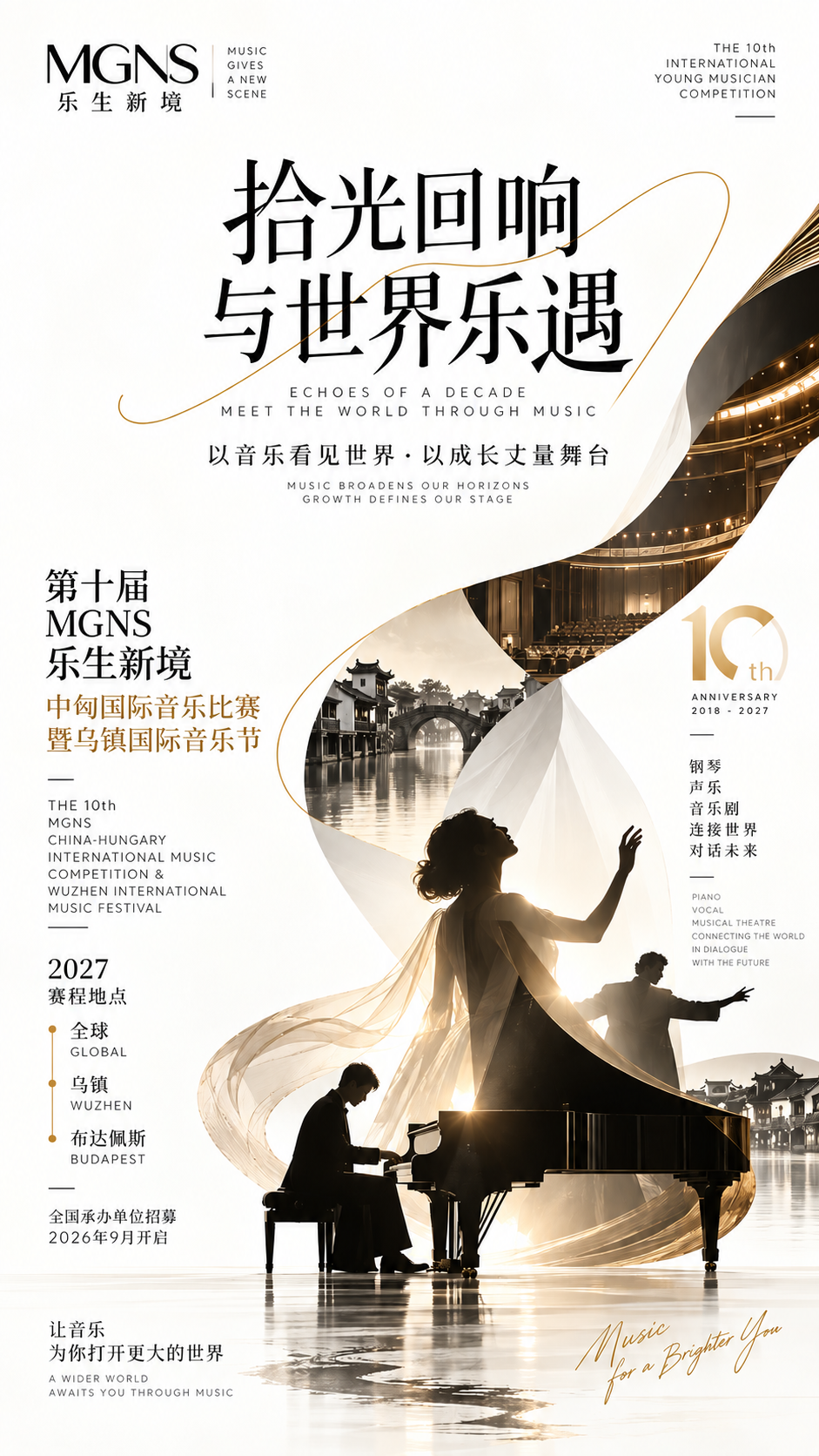
1. About the Competition
Jointly presented by the MGNS International Music Competition Organizing Committee and the Global Association of Music Educators, this China–Hungary international competition is the piano-focused event within the MGNS competition programme. It aims to discover and develop talented young pianists in China and internationally.
According to the organizer, the Budapest competition and related activities take place at the Liszt Museum Concert Hall in the Old Academy of Music. The announcement describes this as the place where Franz Liszt, the celebrated ‘King of the Piano’, lived, taught and composed in his later years, from 1881 to 1886. It notes the display of pianos used by Liszt and presents his classes there as an origin of the modern piano masterclass tradition. For young pianists, the organizer frames a performance in Liszt’s final musical home as a tribute connecting them with the golden age of piano artistry.
The competition is positioned as a two-way bridge for piano music between China and Hungary: carrying forward the Hungarian tradition represented by Franz Liszt, Béla Bartók and Zoltán Kodály, while bringing Chinese piano works to an international stage. It seeks to connect East and West through professional competition, performance and exchange for young piano students.
The organizer’s stated principles are high standards of organization, artistry and professional practice, with an open, fair and impartial platform for competition, performance, presentation, exchange and learning. Its goals include developing young people’s musical understanding, supporting aesthetic education and encouraging cultural exchange between China and Hungary. Drawing on what it describes as ten seasons of competition experience since 2018, the organizer presents the 10th edition in 2027 as a step towards closer alignment with recognized international competition standards and stronger quality and public trust.
2. Competition Philosophy
The organizer states that in May 2019 the MGNS European Music Competition established a formal partnership with a well-known European youth music competition. The announcement says that this edition draws on the European experience of the Royal Youth Piano Competition, adopting a structured competition philosophy and varied formats with the aim of meeting leading international standards.
The organizer describes a programme of seasonal masterclasses in cities and regions across Europe and China, led by pianists, educators and performers from China and overseas. These are intended to combine a high-standard competition with access to advanced professional music education.
3. Judging and Competition Design
Fairness of judging: the organizer describes a professional jury of experienced experts and professors from China and overseas, working under an internationally oriented framework for fair assessment, with jurors assigned randomly to locally hosted divisions. From this edition, it says the judging system will be further aligned with standards used by AAF-certified competitions, including conflict-of-interest recusal and information-disclosure procedures. This is a statement of intended alignment, not a claim that this competition has obtained AAF certification.
Inclusive competition design: MGNS describes a piano programme informed by the subject structures of international youth music competitions, encompassing solo and collaborative piano. The announcement introduces a new Collaborative Piano (Piano Accompaniment) category intended to correspond with specialisms at international music institutions. The supplied category tables do not list separate rules for this new category, so prospective applicants should confirm them with the committee.
Organizational Structure
- Organizers in China: MGNS International Music Competition Organizing Committee.
- Organizers in China: Global Association of Music Educators.
- Organizers in China: 漫音云舒(香港)文化传媒有限公司 — Manyin Yunshu (Hong Kong) Culture and Media Co., Ltd. (descriptive translation).
- Local implementing organization: 漫音云舒(北京)文化传媒有限公司 — Manyin Yunshu (Beijing) Culture and Media Co., Ltd. (descriptive translation).
Organizer Profile: Global Association of Music Educators
The organizer describes the Global Association of Music Educators (G.A.M.E) as a Hong Kong-registered, nonprofit professional academic association whose presidium includes musicians, performers, educators and artists from multiple countries. Its stated mission is to create a platform for cultural exchange and shared development, advance international musical collaboration and nurture the next generation of musical talent.

Competition Schedule
| Round | Dates | Venue and piano stated in the announcement |
|---|---|---|
| Local preliminary rounds | December 2026–March 2027 | Local divisions; consult each division’s notice for its arrangements. |
| Beijing preliminary round | 26–27 December 2026; 1–2 January 2027 | Beiguo Theatre, Beijing Normal University; nine-foot Steinway concert grand. The source uses both 北国剧场 and 北国剧院 for the venue. |
| China semi-final | May 2027 | Opera and Concert Hall, Central Conservatory of Music, Beijing (tentative); nine-foot Steinway concert grand. The venue and piano labels in this source paragraph say ‘National Final’. |
| European Grand Final | August 2027 | Budapest; nine-foot Steinway concert grand. The introduction identifies the Budapest venue as the Liszt Museum Concert Hall. |
Schedule clarification: the source calls the May 2027 round the ‘China semi-final’ but labels its venue and piano as those for the ‘National Final’. The venue is also marked tentative. Confirm the final round name, instructions and venue with the organizing committee.
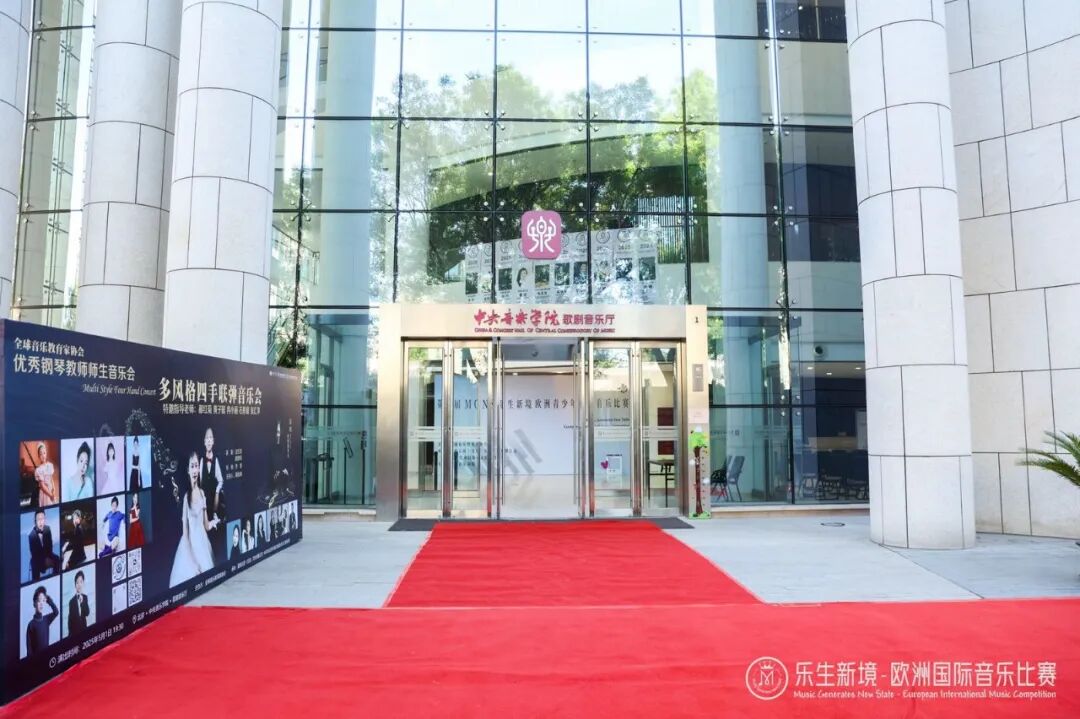
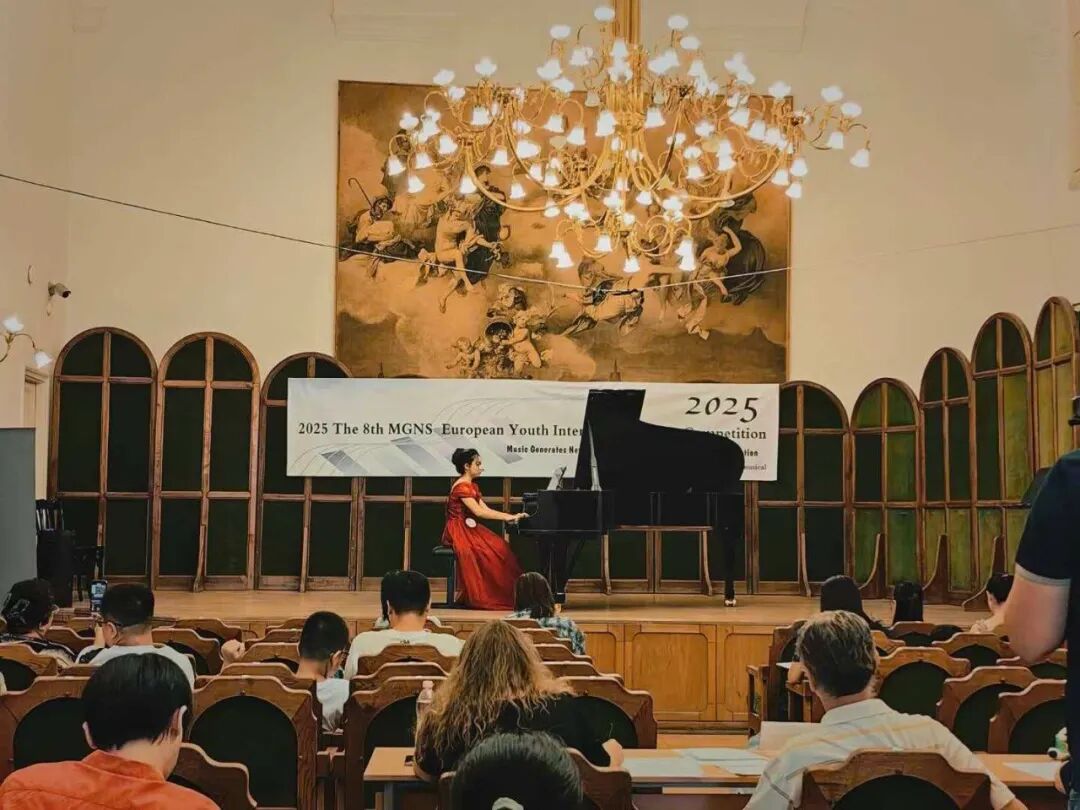
Register for the Beijing Division
Beijing preliminary-round dates: 26–27 December 2026 and 1–2 January 2027. Venue: Beiguo Theatre at Beijing Normal University, named 北国剧院 in the registration section and 北国剧场 in the schedule. Piano: nine-foot Steinway concert grand. Registration is open; scan the QR code below to begin a new challenge and a new musical chapter.
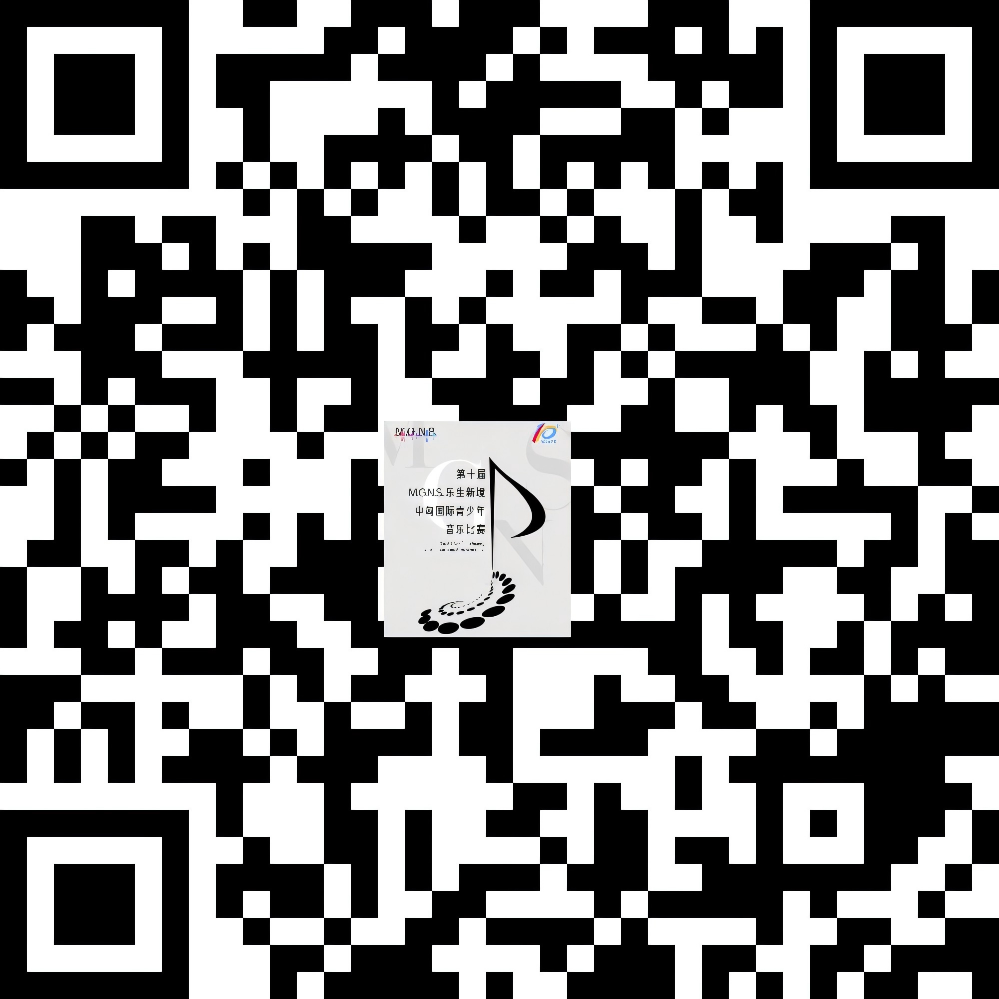
- Registration deadline: 16 December 2026.
- Payment term stated in the announcement: payments are non-refundable once made. Before paying, check your category, eligibility, repertoire, session and this condition.
Piano Categories and Repertoire Requirements
The following is a searchable text version of all six category tables in the source. Age labels, birth-date ranges, time limits and round requirements retain the source information. Some age labels do not match the listed birth-date ranges. Ask the committee which eligibility rule applies before choosing a category.
01 Professional Division
| Category | Age label | Birth dates stated |
|---|---|---|
| Professional A | Ages 10–11 | 1 January 2015–31 December 2016 |
| Professional B | Ages 12–13 | 1 January 2013–31 December 2014 |
| Professional C | Ages 14–15 | 1 January 2011–31 December 2012 |
| Professional D | Age 16 and above | Before 31 December 2010 |
- Professional preliminary round: one étude and one Chinese or non-Chinese work; total duration no more than 10 minutes.
- Professional semi-final: one étude and one Chinese or non-Chinese work; the preliminary-round repertoire may be repeated; total duration no more than 10 minutes.
- Professional Global Grand Final: two freely chosen works in different styles; total duration no more than 20 minutes.
02 Amateur Division
| Category | Age label | Birth dates stated |
|---|---|---|
| Early Childhood | Age 6 and under | After 1 January 2021 |
| Children A | Ages 7–8 | 1 January 2019–31 December 2020 |
| Children B | Ages 8–9 | 1 January 2017–31 December 2018 |
| Children C | Ages 10–11 | 1 January 2015–31 December 2016 |
| Junior A | Ages 12–13 | 1 January 2013–31 December 2014 |
| Junior B | Ages 14–15 | 1 January 2011–31 December 2012 |
| Junior C | Ages 16–17 | 1 January 2009–31 December 2010 |
| Youth | Ages 18–28 | 1 January 1999–31 December 2008 |
| Senior | Over age 60 | Born before 31 December 1966 |
| Open | Ages 29–60 | 1 January 1967–31 December 1998 |
In every amateur category, the preliminary round requires one freely chosen work; the semi-final repertoire is unrestricted; and the Global Grand Final requires two freely chosen works in different styles. Total time limits are listed below.
| Category | Preliminary | Semi-final | Global Grand Final |
|---|---|---|---|
| Early Childhood | 3 minutes | 3 minutes | 7 minutes |
| Children A | 3 minutes | 4 minutes | 7 minutes |
| Children B | 4 minutes | 4 minutes | 7 minutes |
| Children C | 5 minutes | 5 minutes | 8 minutes |
| Junior A | 5 minutes | 5 minutes | 10 minutes |
| Junior B | 6 minutes | 6 minutes | 12 minutes |
| Junior C | 6 minutes | 6 minutes | 12 minutes |
| Youth | 6 minutes | 6 minutes | 12 minutes |
| Senior | 6 minutes | 6 minutes | 12 minutes |
| Open | 6 minutes | 6 minutes | 12 minutes |
03 Ensemble Division
| Category and age eligibility | Preliminary | Semi-final | Global Grand Final |
|---|---|---|---|
| Piano Four Hands, Junior: the two performers’ combined ages must not exceed 28 | No repertoire or time limit | No repertoire or time limit | No repertoire or time limit |
| Piano Four Hands, Advanced: no age limit | No repertoire or time limit | No repertoire or time limit | No repertoire or time limit |
| Two Pianos: no age limit | One freely chosen work; maximum 7 minutes total | Unrestricted repertoire; preliminary repertoire may be repeated; maximum 7 minutes total | Two freely chosen works in different styles; maximum 14 minutes total |
| Concerto: no age limit | One freely chosen work; maximum 7 minutes total | Unrestricted repertoire; preliminary repertoire may be repeated; maximum 7 minutes total | Two freely chosen works in different styles; maximum 14 minutes total |
04 Composer and Repertoire Division
All composer and repertoire categories have no age limit. The preliminary round requires one freely chosen work in the relevant category, with a 6-minute limit. The semi-final requires one such work, which may repeat the preliminary repertoire, with a maximum total of 7 minutes. The Global Grand Final requires two works in the same category, with a maximum total of 12 minutes. The categories are listed below.
| Category | Preliminary and semi-final | Global Grand Final |
|---|---|---|
| Chinese Works | One Chinese work | Two Chinese works |
| Chopin | One work by Chopin | Two works by Chopin |
| Beethoven | One work by Beethoven | Two works by Beethoven |
| Mozart | One work by Mozart | Two works by Mozart |
| Haydn | One work by Haydn | Two works by Haydn |
| Liszt | One work by Liszt | Two works by Liszt |
| Tchaikovsky | One work by Tchaikovsky | Two works by Tchaikovsky |
05 ABRSM Examination Repertoire Division
All ABRSM examination repertoire categories have no age limit. The preliminary round requires one freely chosen piece from the 2026 ABRSM examination repertoire. The semi-final also requires one piece from the 2026 repertoire and may repeat the preliminary selection. The Global Grand Final requires two pieces from the 2025–2026 ABRSM examination repertoire. The syllabus years and time limits below follow the source exactly.
| Category | Preliminary | Semi-final | Global Grand Final |
|---|---|---|---|
| ABRSM Grades 1–2 | 2 minutes | 2 minutes | 4 minutes |
| ABRSM Grades 3–4 | 3 minutes | 3 minutes | 6 minutes |
| ABRSM Grades 5–6 | 3 minutes | 3 minutes | 6 minutes |
| ABRSM Grades 7–8 | 4 minutes | 4 minutes | 8 minutes |
06 Free-Choice Repertoire Division
All free-choice categories have no age limit. Each round requires one freely chosen piece at the stated examination-grade difficulty. The semi-final piece may be the same as the preliminary-round selection.
| Category and difficulty | Preliminary | Semi-final | Global Grand Final |
|---|---|---|---|
| Free Choice A: examination Grades 1–3 difficulty | One piece; maximum 3 minutes | One piece; maximum 3 minutes | One piece; maximum 4 minutes |
| Free Choice B: examination Grades 4–6 difficulty | One piece; maximum 4 minutes | One piece; maximum 4 minutes | One piece; maximum 8 minutes |
| Free Choice C: examination Grade 7 or above difficulty | One piece; maximum 5 minutes | One piece; maximum 5 minutes | One piece; maximum 10 minutes |
Certificate inserts and trophies: the committee expects to dispatch these progressively by SF Express approximately 3–4 weeks after results are announced. Shipping charges are payable by the recipient on delivery; please watch for your shipment.
Scoring, Awards and Advancement
01 Beijing Preliminary Round
Scores are awarded out of 100. First- and Second-Prize winners in the preliminary round qualify to advance to the next round.
| Score | Competitor award | Teacher award |
|---|---|---|
| 90 and above | First-Prize certificate | Distinguished Teacher Award certificate |
| 80–89 | Second-Prize certificate | Distinguished Teacher Award certificate |
| 75–79 | Third-Prize certificate | Not specified in the source |
| 75 and below | Merit Award certificate | Not specified in the source |
Preliminary-score clarification: the published ranges place a score of 75 in both Third Prize and Merit Award, and do not explain decimal-score boundaries. These have not been silently changed; ask the committee to confirm the applicable rules.
02 China Semi-final
Scores are awarded out of 100. First- and Second-Prize winners qualify for the Global Final.
| Score | Competitor award | Teacher award |
|---|---|---|
| 90 and above | First-Prize certificate | Distinguished Teacher Award certificate |
| 85–89.9 | Second-Prize certificate | Distinguished Teacher Award certificate |
| 80–84.5 | Third-Prize certificate | Not specified in the source |
| 79.9 and below | Merit Award certificate | Not specified in the source |
Semi-final-score clarification: the source sets the Third-Prize ceiling at 84.5 and the Second-Prize minimum at 85, leaving intermediate scores unexplained. The published values are retained; the committee must confirm the applicable award. All award certificates are sent with shipping payable by the recipient.
03 Outstanding Teacher Recognition
Teachers whose students receive First or Second Prize will be recognized as outstanding instructors. Teachers of First-Prize winners may apply to join the Global Association of Music Educators. The source uses ‘Distinguished Teacher Award’ in the score tables and ‘Outstanding Teacher’ in this section; the issued certificate determines the final title.
Cash Prizes
| Division | Qualification | Cash prize |
|---|---|---|
| Professional and University divisions | Top three places, with scores of 93 or above | €600, €400 and €200 respectively |
| Amateur division | Highest-scoring competitor in each category, with a score of 93 or above | €100 |
| Two Pianos and Concerto categories | Highest score, 93 or above | €150 |
- If a category has fewer than five competitors in the Global Final, its cash prize is cancelled.
- Prize disbursement is subject to the final arrangements at the event.
- The prize terms mention a University division, but the supplied category tables do not define it. The source also does not clarify whether ensemble prize amounts are per entry or per person. Confirm these points with the committee before relying on the prize terms or entering the relevant category.
Previous Editions and Regional Host Recruitment
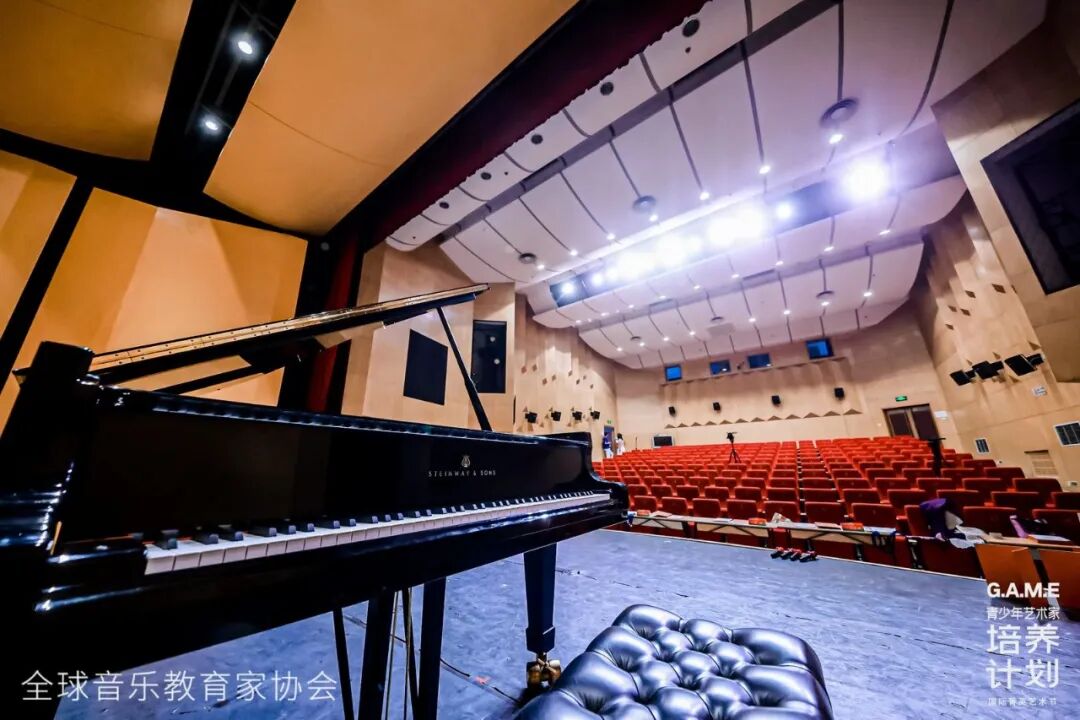
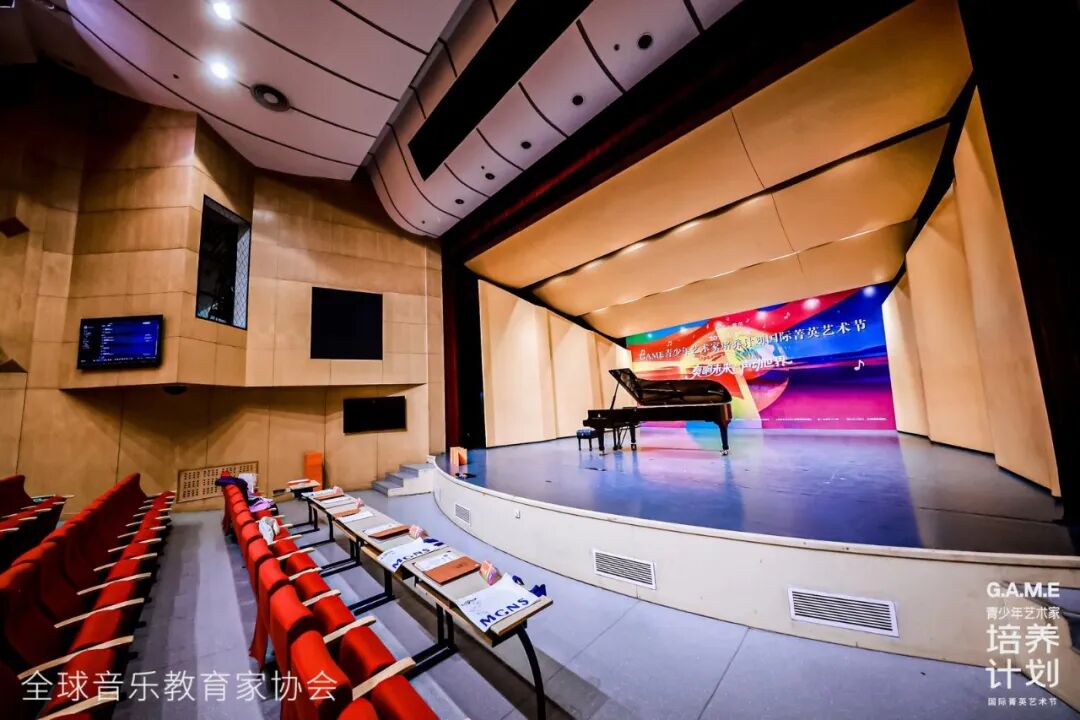
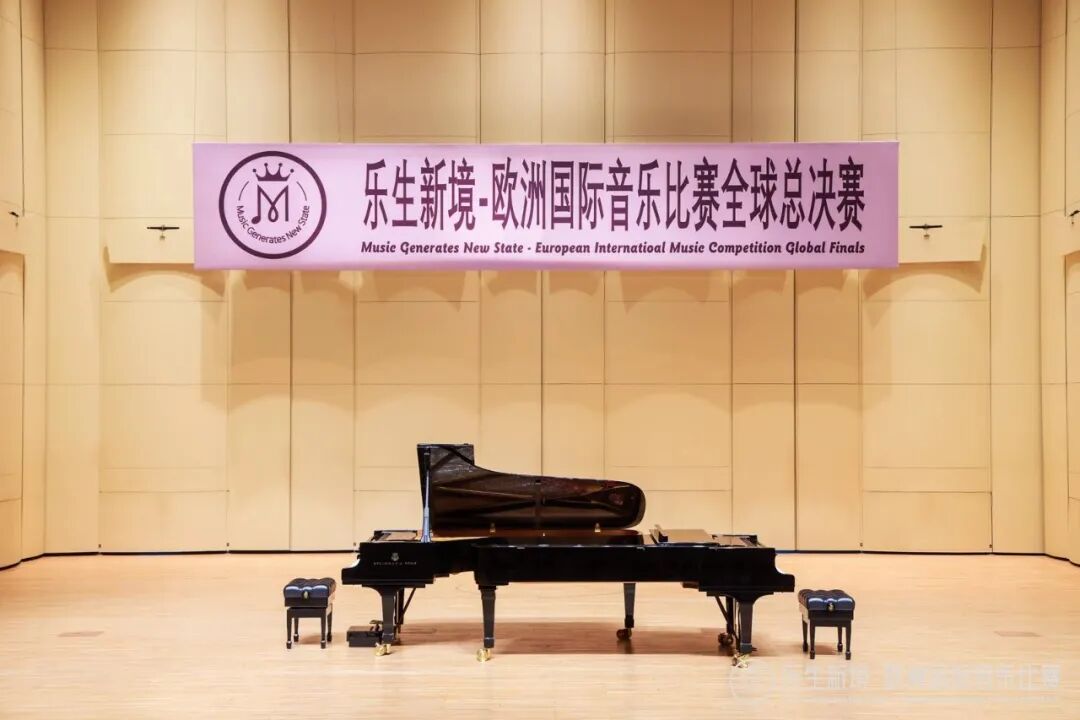
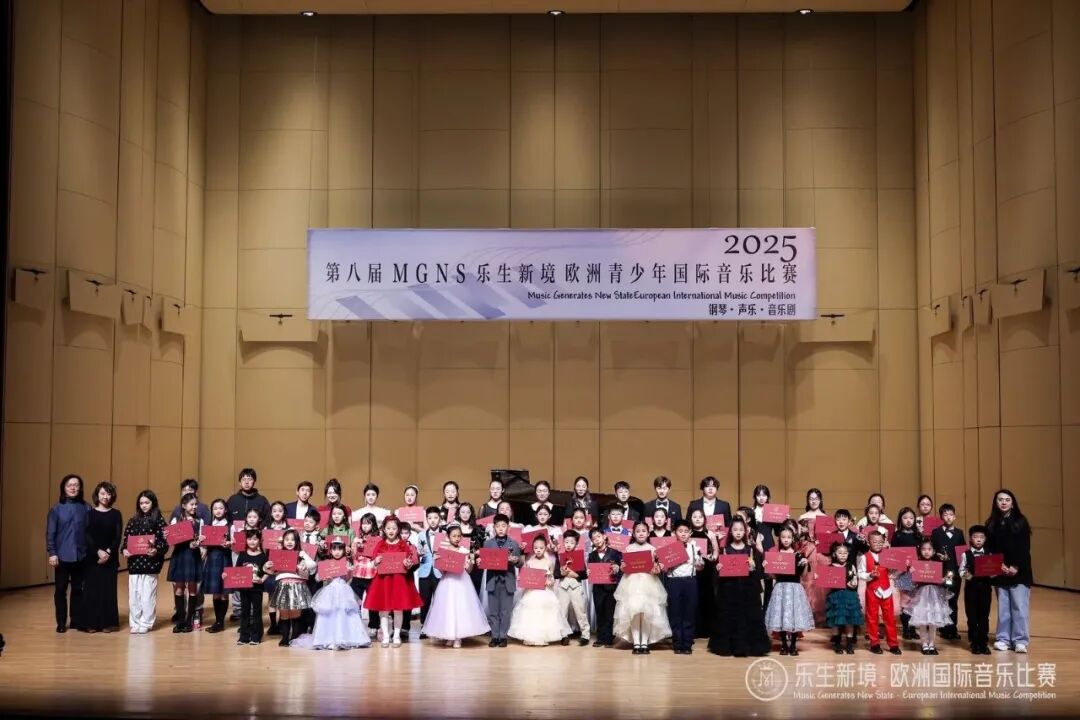
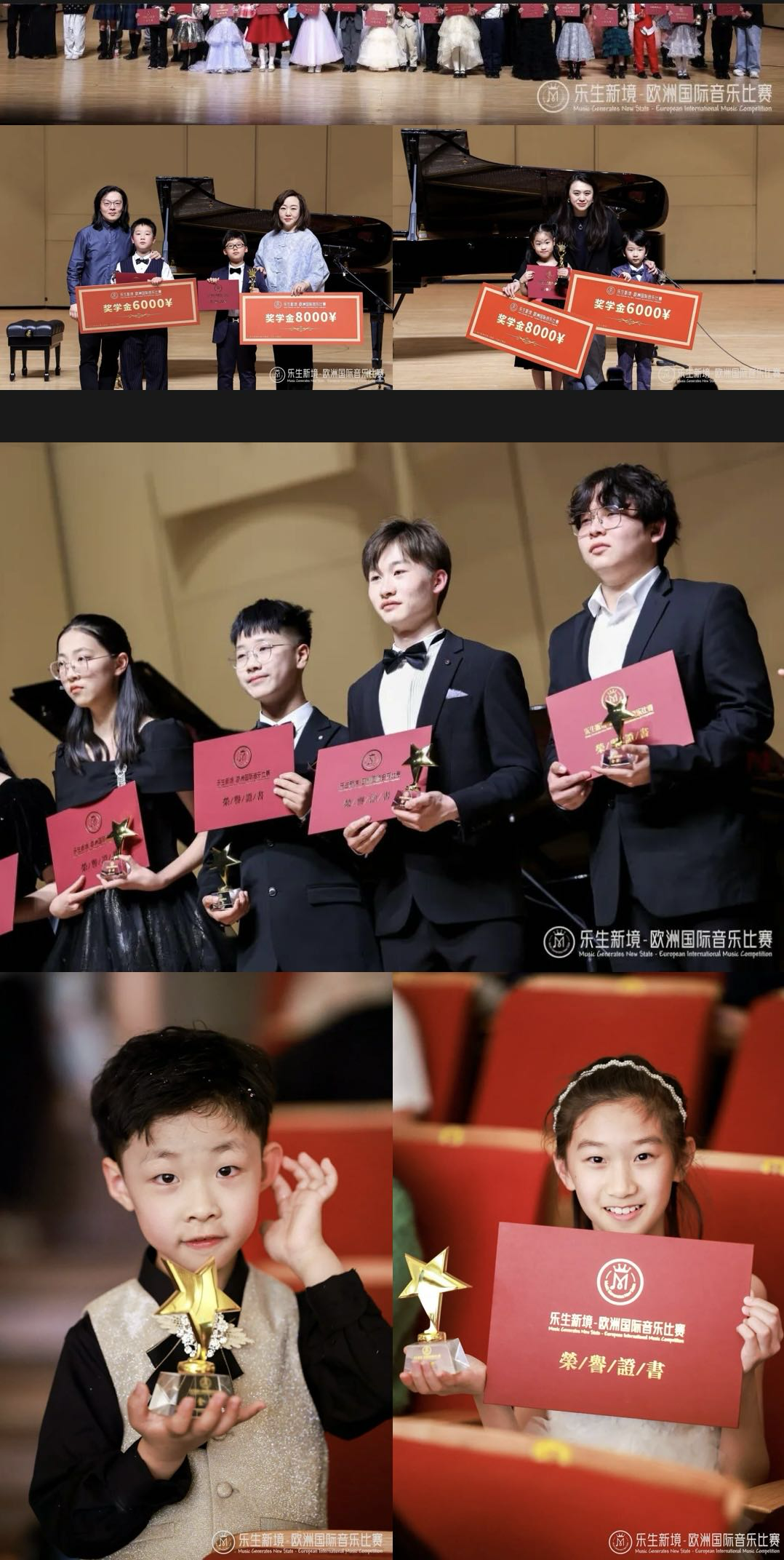
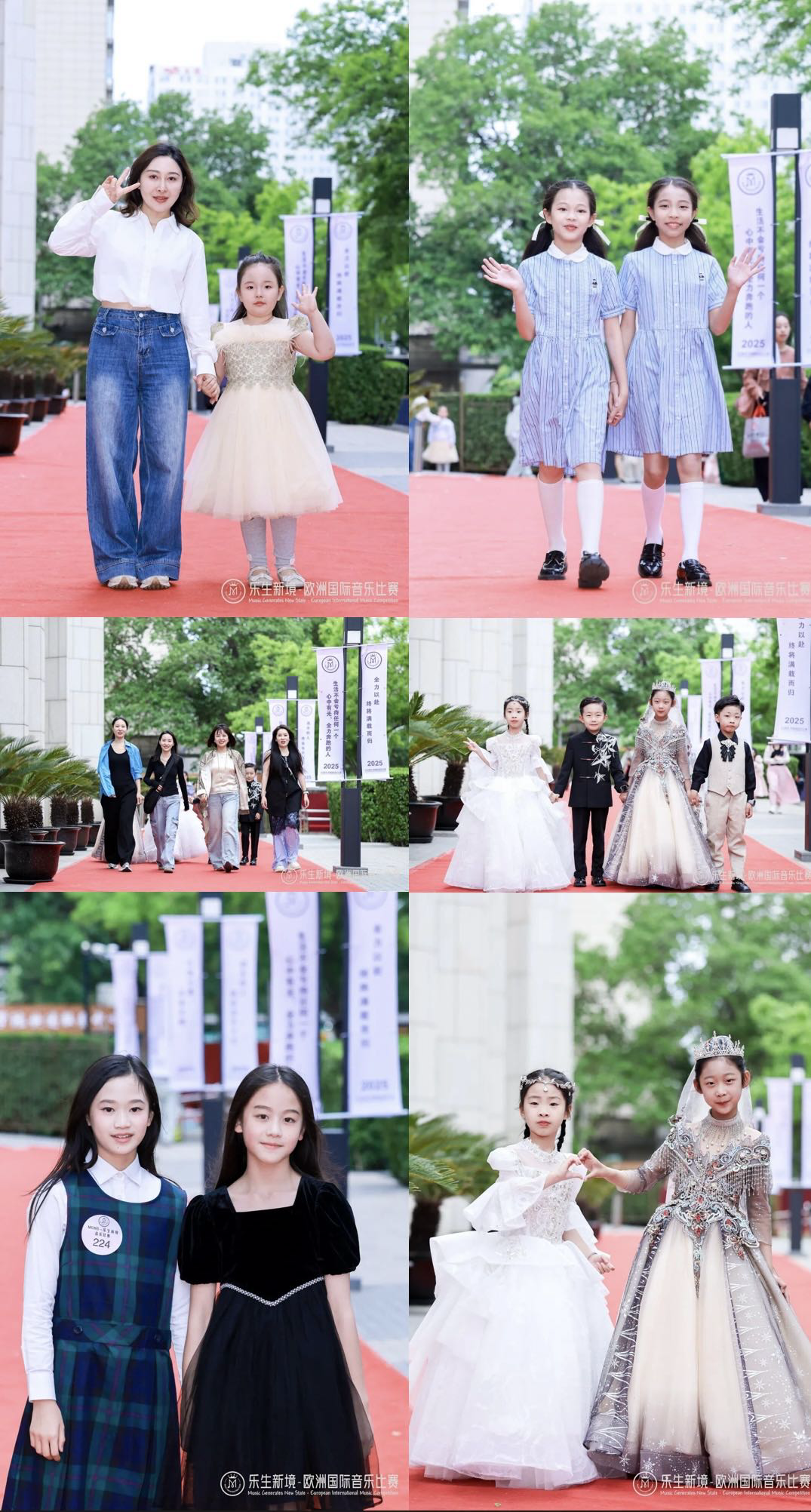
Global regional-host recruitment has launched for the 10th MGNS China–Hungary International Youth Music Competition. The following photographs appeared in the organizer’s announcement and show previous editions. They are not evidence that the current edition has already taken place or that its prizes have already been awarded.
Republished from the organizing committee’s announcement, with its dates, conditions and qualifications retained.